
Fighting Climate Change in Florida
This house in Florida is completely ‘off grid’. It uses absolutely no fossil fuel of any kind and produces no waste other than pure oxygen and water.
The 3.5m overhang of the roof helps keep the direct sun out of the house and reduces the load on the air conditioning system. It also creates a beautiful place to sit and enjoy the natural breezes created by the shape of the house.
Energy from the sun
Two rows of vacuum tube solar hot water panels at the top of the roof heat all the hot water in the house.
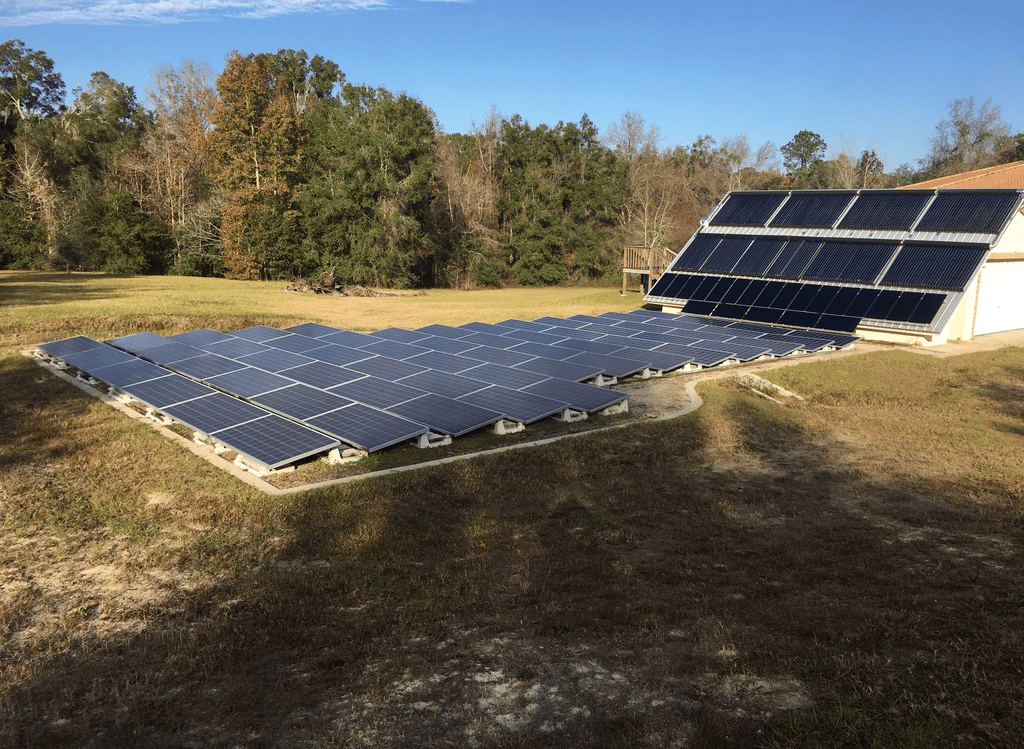
The remaining panes are solar voltaic. There are also some extra solar voltaic panels facing south east and south west. These produce all the electricity consumed by the house.
Comfort and Efficiency
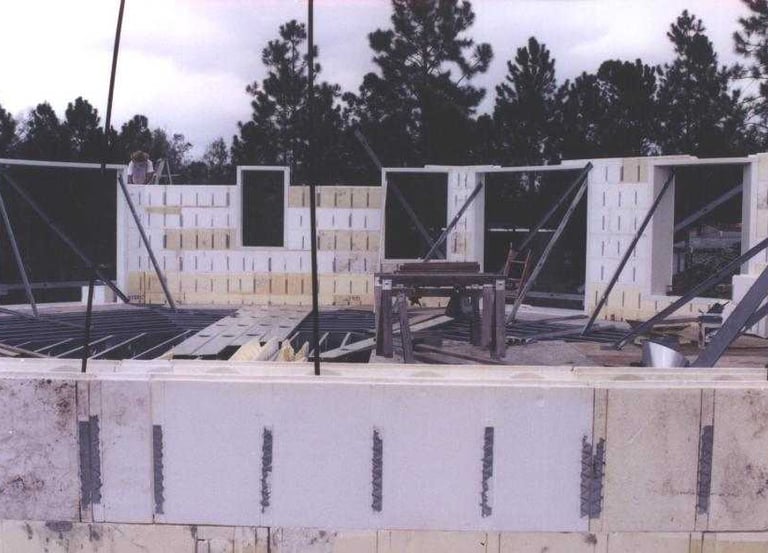
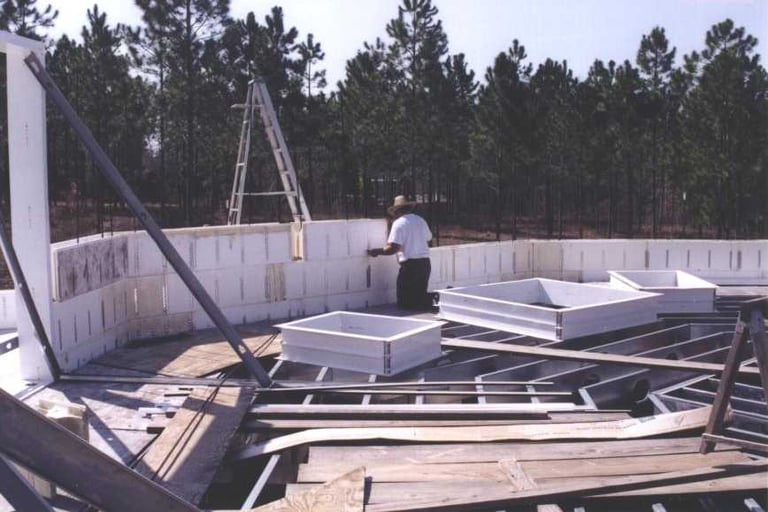
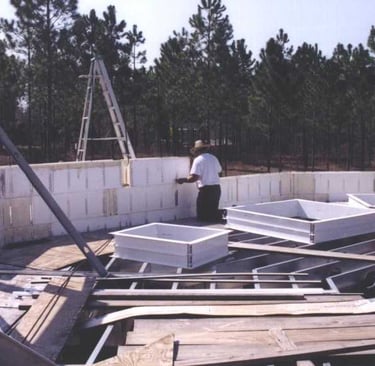
Polystyrene forms are filled with steel rebar and concrete to form the outer walls. This gives excellent insulation and enormous thermal mass in addition to being quiet and hurricane proof. The insulation and thermal mass greatly reduces the load on the heating and cooling system.
Roofing is Important
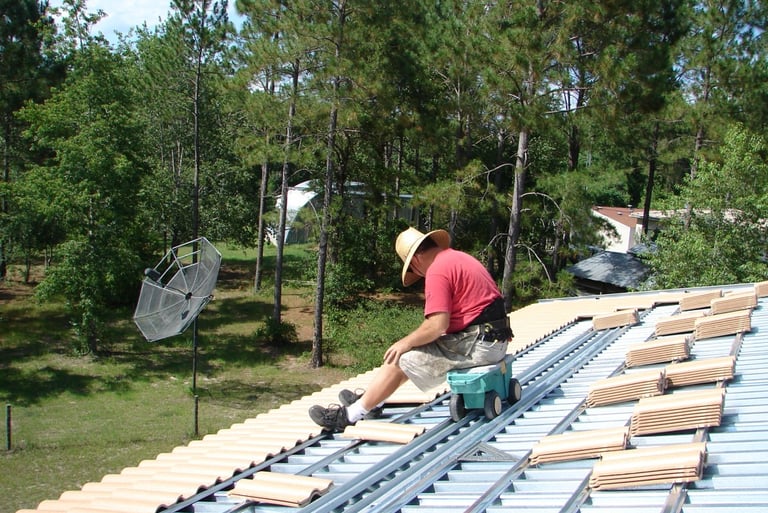
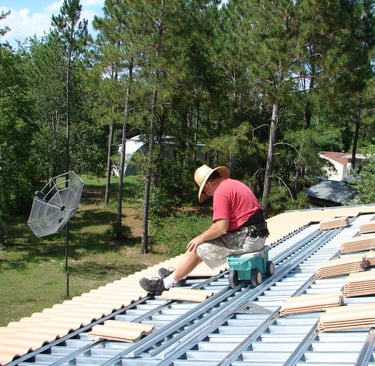
A steel deck to the roof on an all steel structure provides extreme strength and reflects the heat from the sun. The under side of the deck is coated in a thick layer of closed cell insulating foam. The ceramic tiles protect the deck from the sun and weather. A gap between the tiles and the deck helps insulate the roof from the sun in the heat of the summer. Ceramic tiles, unlike asphalt shingles, should last well over 100 years.
Eco-Friendly Air Conditioning
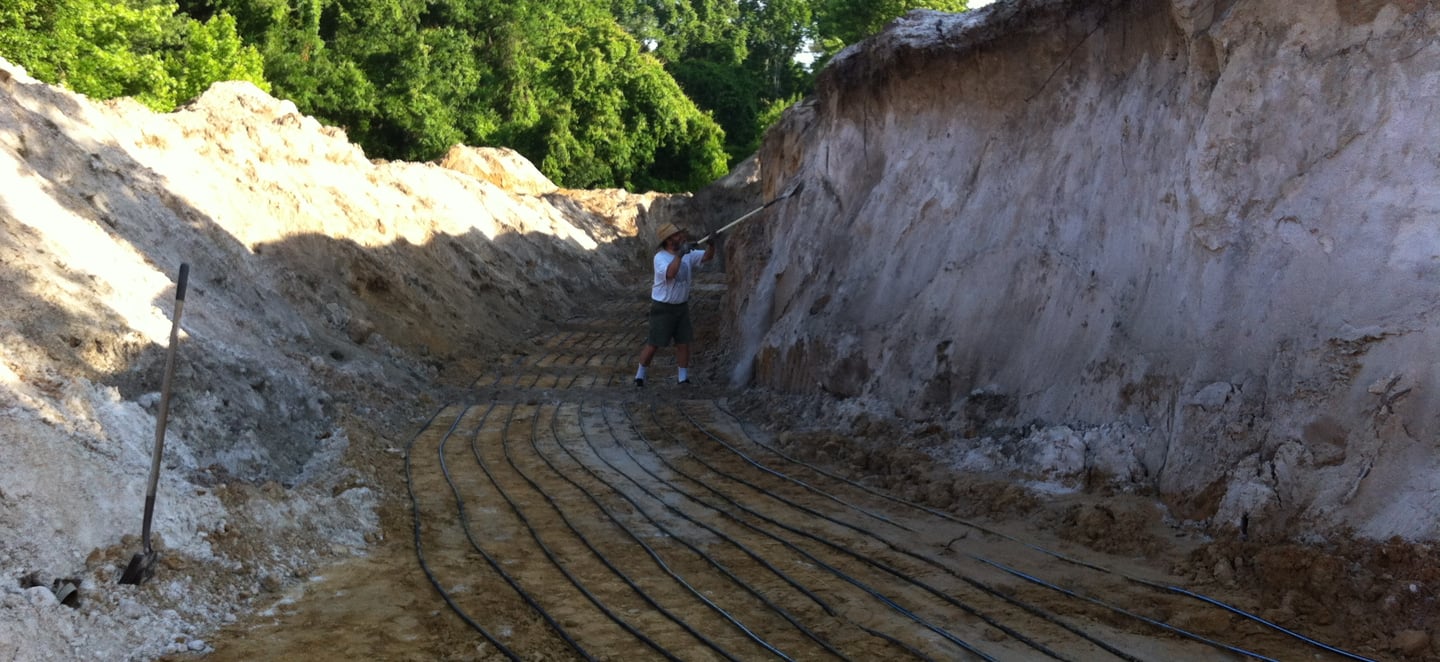

Just over 1.6 kilometres of pipe buried 4 metres underground carries water in 12 parallel loops from the air conditioning system. At that depth the ground is a fairly constant temperature all year round. In the summer the water is hot as it enters the loop from heat being removed from the house. In the winter it is cold as the house is being heated. The water coming back from the loop is always at about the same temperature which makes the air conditioner very much more efficient. The house uses about a ¼ of the amount of energy to stay cool in summer and warm in winter as a traditional American home of a similar size in the same climate.
Harvesting power from the sun
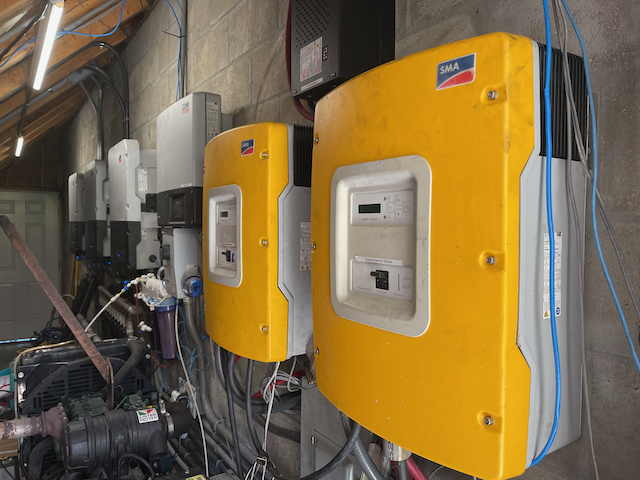
The four grey inverters on the wall in the photo above take DC power from the solar panels and convert it to AC for use in the house. The two yellow inverters manage the whole system using spare electricity to charge the batteries during the day and creating the AC power for the house from the batteries at night. There is a diesel generator in case of emergencies but it does not run other than during its weekly maintenance cycle for 15 minutes every Saturday lunch time. Between the battery and the hydrogen system we have all the electricity we need no matter the weather.
Storing the energy
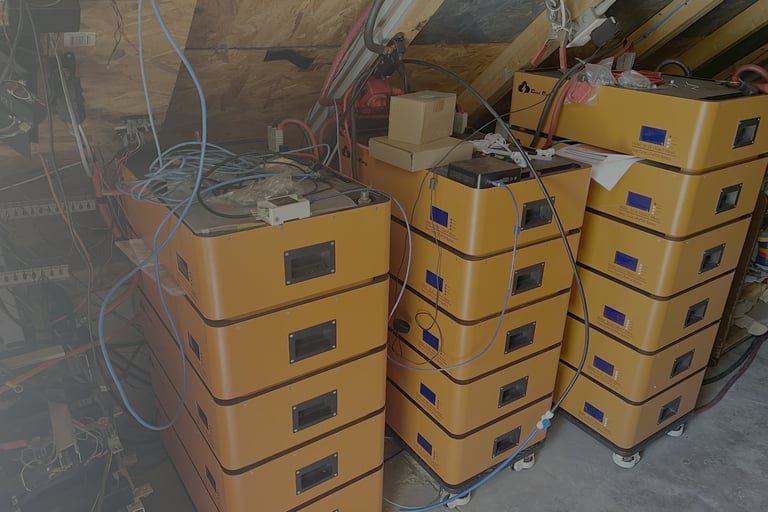
The battery consists of 16 packs of LiFePo4 (Lithium Iron Phosphate 4) cells, in parallel, to produce 52Volts DC with a capacity of approximately 124kWhr (kilowatt hours). This stores the electricity when the sun is shining and gives it back when it is needed.
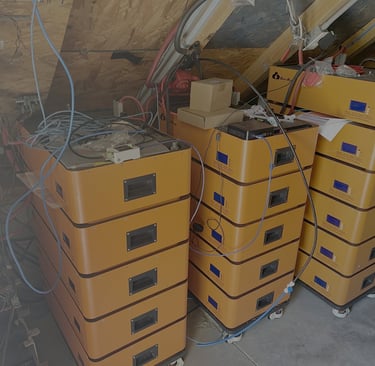
Extra electricity is also used to charge the car, a Tesla model S, which is plugged in when it is at home and is always ready without ever having to visit a gas station to fill with nasty smelly polluting gasoline or using electricity from the grid made with dirty coal or natural gas. There is no such thing as clean coal regardless of how you process it.
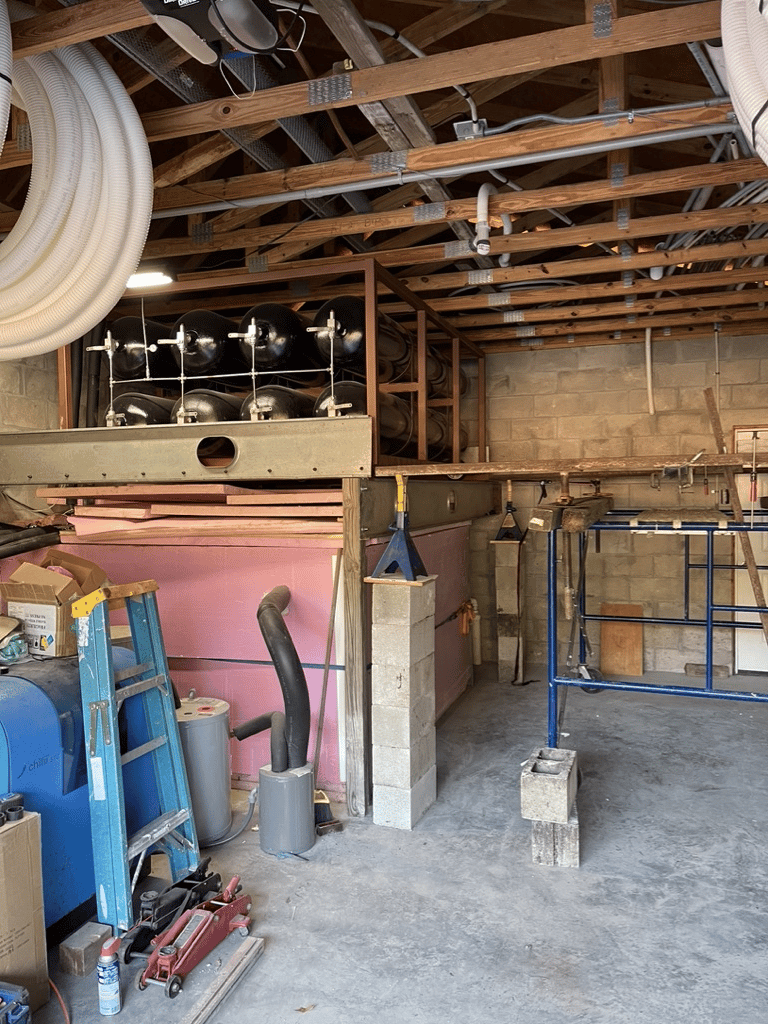
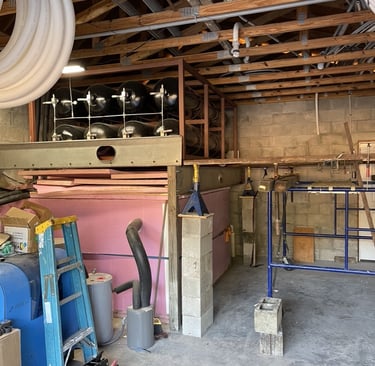
The pink insulation surrounds a 3500 litre tank of hot water which is heated to between 75°C and 95°C by the solar panels on the roof and supplies all the hot water for the house.
All the hot water you need
Hydrogen for the future
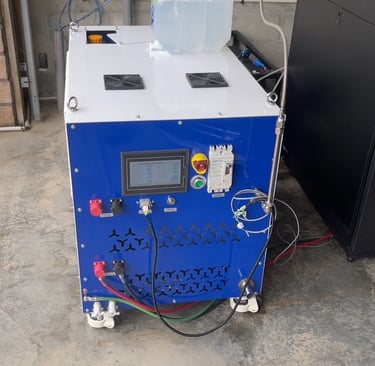
Above the hot water tank are 8 black cylinders filled with hydrogen at up to 35Bar. 1Bar is approximately 1 atmosphere of pressure. The hydrogen is generated by using spare electricity to split water molecules into one oxygen and two hydrogen atoms by a series of electrolysers in the black rack next to the fuel cell in the picture below. The hydrogen is then used by the fuel cell to generate electricity when the weather is bad or it is dark so the sun is not shining and the batteries are low.
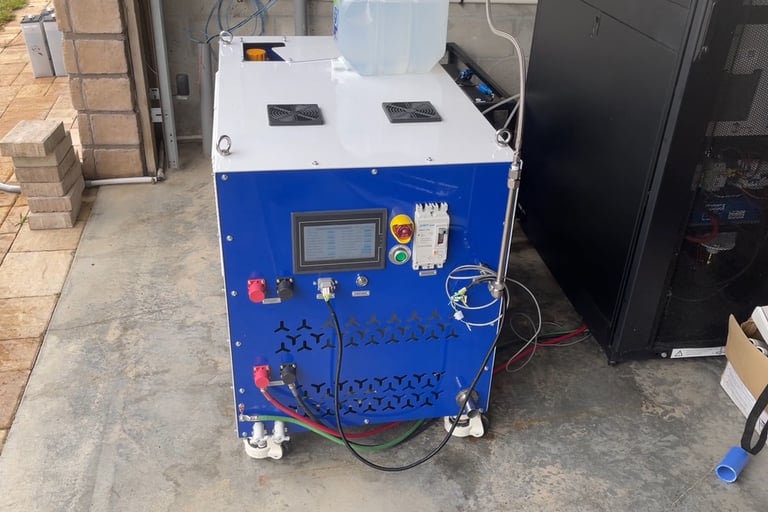
Since 2020, even during the worst storms, when all the houses around were without power, water and air conditioning we have always had plenty of hot water, electricity and cooling for the house and to charge the car. We even provided water from the well, pumped with electricity we generated ourselves, to some of our neighbours during the hurricane season when the grid power went off for periods of time due to local storm damage.
© 2025. All rights reserved.